
Searching Decatur County Criminal Dockets
Begin with Kansas Judicial Branch CaseSearch. Pick District, set the location to Decatur County, and limit the case type to Criminal when you know it. The cleanest match is a full case number. A citation number or a party name can also work, though a name alone never proves you have the right person. Newer criminal files may use DC-YYYY-CR-000001, while an older one may show YYYY-CR-000001.
When the portal comes up short, use the public terminal. It sits at the Decatur County District Court. The District Court Clerk can fix a wrong number or point you to the right request channel, by phone at 785-475-8107 or at the counter. Want a copy? Ask about a written record request. Municipal ordinance cases stay with the issuing city's municipal clerk, outside the district portal.
- Identify the district or municipal court shown on the notice.
- Choose case number, citation number, or party name in CaseSearch.
- Apply Decatur County and Criminal filters only when supported.
- Read the events index through the latest entry.
- Use the terminal or clerk for missing documents and certified copies.
Decatur Criminal Number Change
Decatur County joined the Kansas eCourt system on July 11, 2022. That cutover explains a strange result: a valid case number that returns nothing online. A newer criminal file may carry the DC county prefix. A paper notice or an old printout may still show the legacy year, case type, and sequence format. If the number fails, search by name or citation. Then ask the clerk whether the format changed during conversion.
Never invent a prefix. Copy every character from the court notice and keep any leading zeros. A pre-transition case may show its public header online. The older documents may sit only at the courthouse. The statewide district-record guidance is clear: document availability generally begins once a court starts operating in eCourt, subject to access limits. So an older Decatur file can have a searchable header with no remote document links at all.
Missing Decatur Criminal Documents
A case that shows but offers no document link calls for a channel check. Write down the exact case number, the event date, the event title, and whether the page displays a document icon or a restriction notice. A complaint, journal entry, sentencing order, or dismissal can be public record yet still not downloadable. One possible reason is the July 2022 conversion. Rule-based exclusion, redaction, or an old paper file are others.
Next, use the public courthouse terminal during clerk hours. Kansas Supreme Court Rule 22 treats terminal access as its own public-access level, not just a copy of the web portal. Ask the clerk whether the item is public at the terminal, sits in a paper file, or needs a written request. Do not photograph the screen. The 17th Judicial District's Rule 212 bans pictures, video, audio recording, and broadcasting in the court facility without permission.
Still nothing? File a narrow Kansas Open Records Act request. Name Decatur County District Court, give the case number, identify the specific entry or order, and include the date range. State how you want delivery, and request an estimate before any reproduction. When open content can be separated from protected content, a clerk may provide a redacted copy. Never read a denial or a missing link as a verdict the court never entered.
Inside a Decatur County Criminal Docket
Kansas names this chronological trail an events index or register of actions. It stands apart from the case header and the filed documents. When all three layers are available, read each one. The header identifies the file. The index dates every filing, hearing, and result. A document list may show a public order. Keep in mind a listed item is not always downloadable.
| Case number | County prefix, year, CR type code, and sequence, such as DC-YYYY-CR-000001. |
|---|---|
| Case header | County, case type, filing date, status, and judicial officer when public. |
| Charges | Filed allegations and statute references; filing is not a finding of guilt. |
| Settings | First appearance, arraignment, preliminary hearing, pretrial, trial, or sentencing dates. |
| Disposition | Public plea, dismissal, diversion, trial result, sentence, or closure entry. |
| Documents | Titles, dates, and public view indicators, subject to restriction or redaction. |
Decatur shorthand: the court publishes no local glossary of codes. Rely on the full portal wording, and confirm any unfamiliar term with the clerk.
Decatur Criminal Outcome Terms
A filed charge opens a case but decides nothing. Pending means the matter was open at the point the source showed it. Dismissed requires care too. Read the dismissal entry to see whether it covers one count or the entire case. A guilty plea is an outcome category. The sentence may appear later in the docket. Diversion or deferred adjudication can carry conditions plus a later closing event.
- First appearance
- The first judicial appearance after a charge or arrest.
- Arraignment
- A stage where the charge and plea process are addressed.
- Disposition
- The resolution, such as a plea, dismissal, diversion, or trial result.
- Journal entry
- A written court record of a ruling or event.
Local Rule 703 demands a preliminary-hearing waiver on the record or in a signed writing. Rule 1101 handles coordination and continuances, so read any later reset alongside the earlier setting.
How a Decatur Criminal Case Moves
Think of a criminal events index as a time line rather than loose labels. It may open with a complaint. A first appearance and arraignment often come next. A felony can bring a preliminary examination or a waiver of it. Motions and pretrial settings often follow. The ending varies: a plea, trial, dismissal, diversion, sentence, or another order. Not every Decatur County case passes through every stage.
Docket flow: Charge Filed › First Appearance › Arraignment › Preliminary Stage › Pretrial › Plea or Trial › Disposition › Sentencing
A continuance only shifts a date. It never erases the entries that came before it, so read the Decatur County criminal docket all the way to the newest event and check any urgent setting with the clerk. Payment works the same way. The Central Payment Center may take an eligible balance, yet paying there neither replaces the events index nor proves any outcome.
Decatur Criminal Activity in Context
Kansas publishes official reports on court activity. They count cases, not people. For FY2024, Decatur County logged 18 felony filings and 47 misdemeanor filings, with a snapshot showing two felony cases and five misdemeanor cases still pending. Treat those numbers as dated workload measures for the court docket, not a current total and never proof of guilt.
The FY2025 table tracks how cases closed. Felony dispositions split into six deferred or diversion outcomes, two dismissals, and 22 guilty pleas. Misdemeanors closed with 11 deferred or diversion outcomes, five dismissals, and 17 guilty pleas. A disposition can settle a case filed in an earlier year, so these totals need not match the filings above them. The zero jury and court trials figure is simply what that annual row records. It does not mean Decatur County has never held a criminal trial.
Courts That Hold Criminal Dockets
State charges in Decatur County land in the Decatur County District Court. That court belongs to the six-county 17th Judicial District. Inside it, a district magistrate judge may handle traffic infractions, misdemeanors, felony first appearances, preliminary examinations, arraignments, and other allowed duties. The District Court Clerk keeps the court records.
A city ordinance charge travels a different path. Oberlin, Norcatur, and Jennings cases sit with the relevant city clerk or municipal custodian. A municipal docket can list the charge, plea, trial, judgment, sentence, and other proceedings under Kansas law. The municipal docket statute explains the split. A city case will not surface in a district-court docket search. The official statute source offers a visual reference for that split.
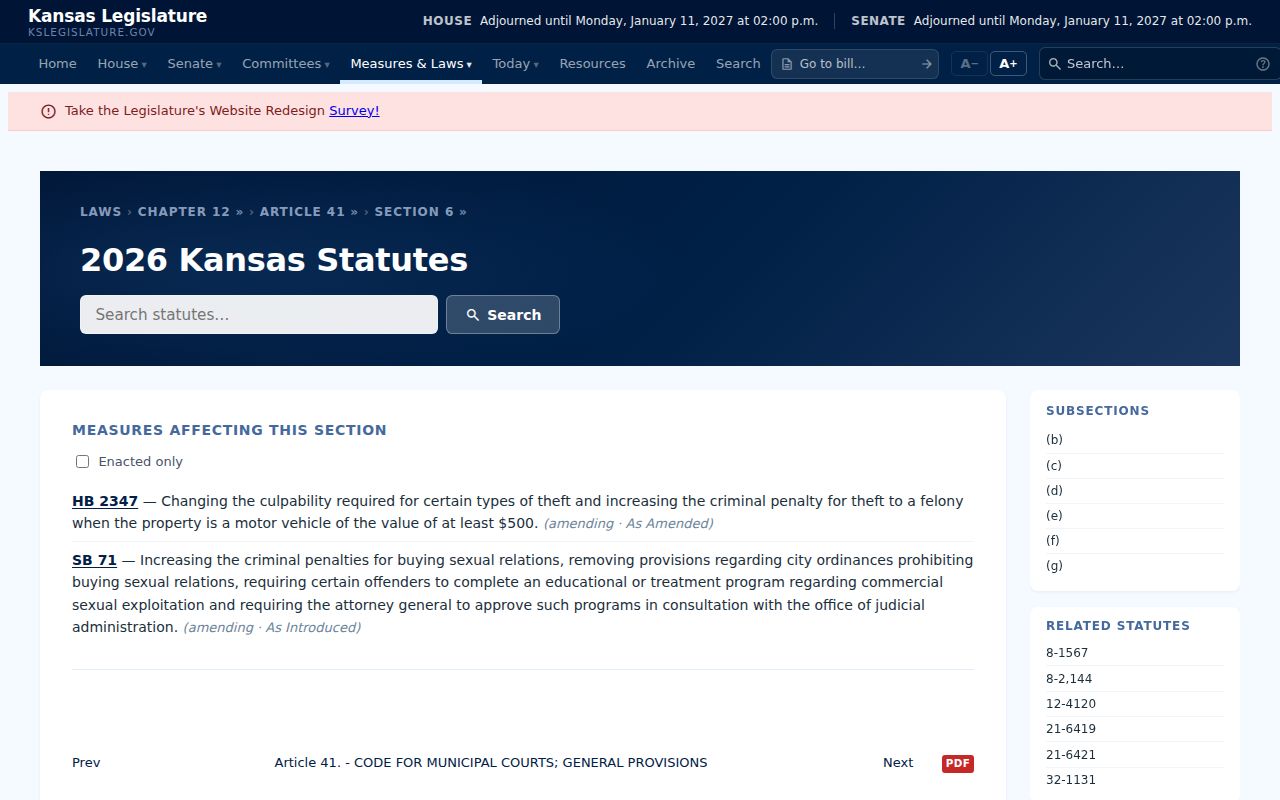
That is the routing rule. First ask whether the charge arose under state law or a city ordinance.
Decatur Payment Is Not Docket Access
The Kansas Courts Central Payment Center is its own system for eligible district-court balances. Its landing view appears here.
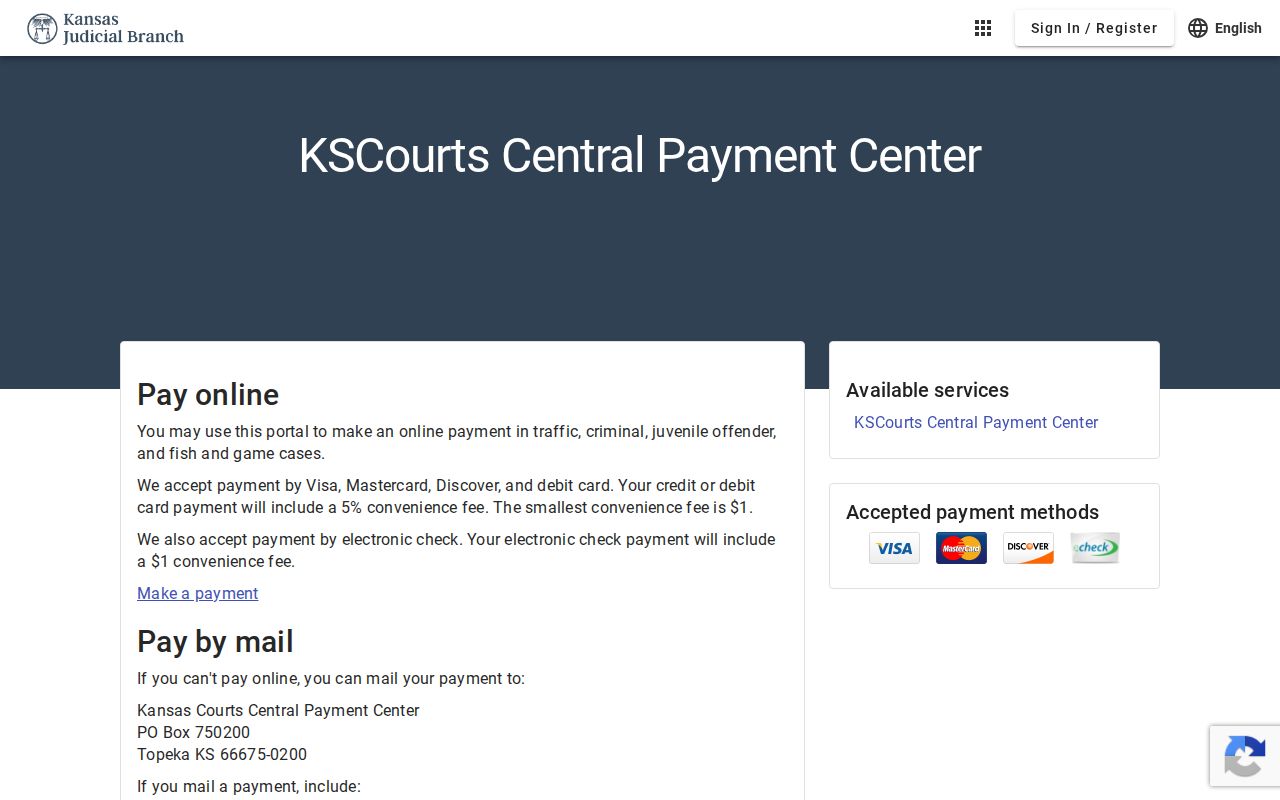
Paying there is not docket access. The route never shows the full case file, and payment status is not a disposition. The center's court payment search carries its own controls for finding a balance.
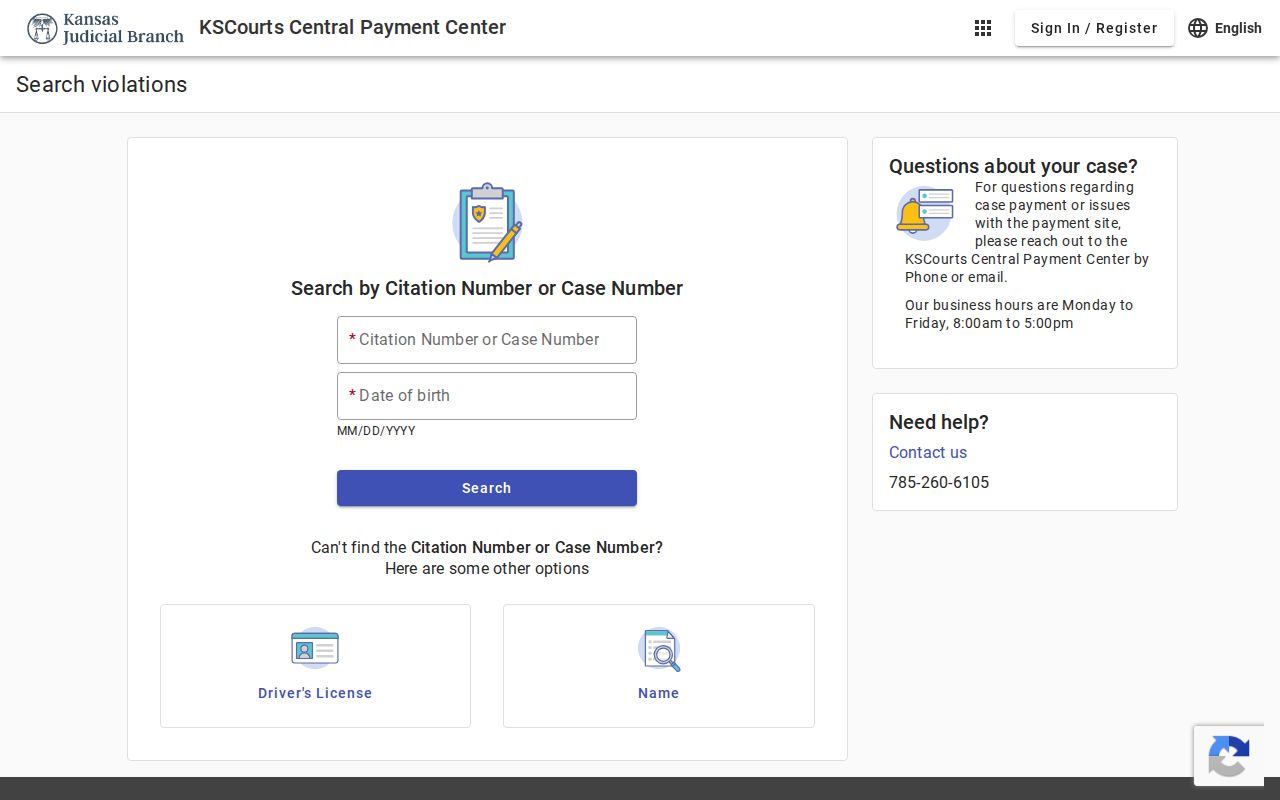
Use the requested case details only to locate a payable balance. For charges, settings, filings, and a certified disposition, go back to CaseSearch or the clerk.
Sealed Dockets and Public Access
A blank result explains nothing. The record may carry an older number. It may predate eCourt, be public only at a terminal, or fall in a restricted category. Official guidance lists search warrants, grand-jury material, inquisitions, some juvenile conversions, expunged records, and certain investigation records as absent or unavailable. Sealed or nonpublic material stays closed at both the portal and terminal levels.
For anything public, work through the terminal, a clerk phone call or counter visit, and a narrow written Kansas Open Records Act request. Name the exact events-index range, order, or disposition you need. Closed matter can sometimes be separated from open matter. Kansas law may then allow a redacted release.
Key access rules:
Kansas Supreme Court Rule 22 provides portal and courthouse-terminal access levels.
K.S.A. 45-218 governs inspection and copy requests.
K.S.A. 38-2309 applies special rules to juvenile-offender records.